Peace law
Ten years of the DPCW: Which path will humanity take?
14 March 2026 · 3 min read · HWPL Austria
War is not a historical phenomenon, it is the daily business of international politics. Despite international law and multilateral institutions, violence keeps breaking out. Ten years ago the Declaration of Peace and Cessation of War (DPCW) put forward a proposal for how that can change, not through yet another declaration of intent, but through binding structures.
HWPL and the DPCW
The DPCW is not a text of abstract ideals but a concrete draft of international law. HWPL, Heavenly Culture, World Peace, Restoration of Light, is the international NGO that proclaimed it. The organisation was founded to protect people from the consequences of war and to help build a lasting peace order.
The impulse came from the war experiences of HWPL's founder. As a young soldier in the Korean War he witnessed devastation at close range. Out of that grew the conviction that subsequent generations must not be drawn into the same conflict patterns, and that an institutional foundation was needed for that.
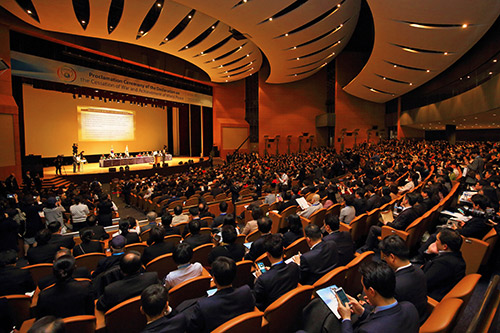
A crucial turning point was the first HWPL World Peace Summit in Seoul in September 2014. Political, religious and civil-society representatives from around the world agreed that international standards must not only react but actively prevent war. To realise that vision, in 2015 HWPL founded the International Law Peace Committee (ILPC) with jurists from several continents. From their work emerged the DPCW with its 10 articles and 38 clauses, officially proclaimed on 14 March 2016.
What the DPCW actually proposes
The DPCW sets minimum standards for handling violence and procedures for the peaceful settlement of disputes. It strengthens international cooperation and collective security, and it gives religion and civil society an explicit role.
The draft does not replace existing international law. Rather, it bundles already recognised principles and structures them so they become workable in practice. Its core is a simple question: even if conflicts are unavoidable, must they necessarily lead to war?
Growing international support
Since its proclamation, the DPCW has been supported by international organisations and national parliaments. Regional bodies such as the Pan-African Parliament (PAP), the Central American Parliament (PARLACEN) and the Latin American and Caribbean Parliament (PARLATINO) have passed resolutions in support. National parliaments in Paraguay, the Dominican Republic and South Sudan have followed. More than 922,000 citizens from 178 countries have backed the declaration with their signatures (as of 2026).
That shows: norms emerge not only in foreign ministries but also through civil-society pressure. At the same time, the reality remains difficult. Conflicts persist, power politics still works, and the transformation envisaged by the DPCW is an ongoing process.
Peace as a legacy, not a wish
For centuries humanity has imposed order through superior power. The DPCW poses a structural question against that pattern: can an international order be built that regulates conflict through procedures, cooperation and institutions instead of armed clashes?
The past decade served to bring this question into the international community and to create first institutional and societal foundations. The task of the coming years is to anchor DPCW principles in the actual practice of the international system.
Which path will humanity take?
Not one on which war remains a means of conflict management, but one that secures peace structurally. Whether conflicts escalate into war or are handled according to clear rules is ultimately a political decision. The DPCW provides a concrete institutional framework for that. The discussions and alliances of the past ten years have shown that this vision is viable. One question remains: will it take hold in the international order, or will it remain just another declaration among many?
- #DPCW
- #International law
- #United Nations